The Pine Barrens May Be New Jersey’s Most Misunderstood Place
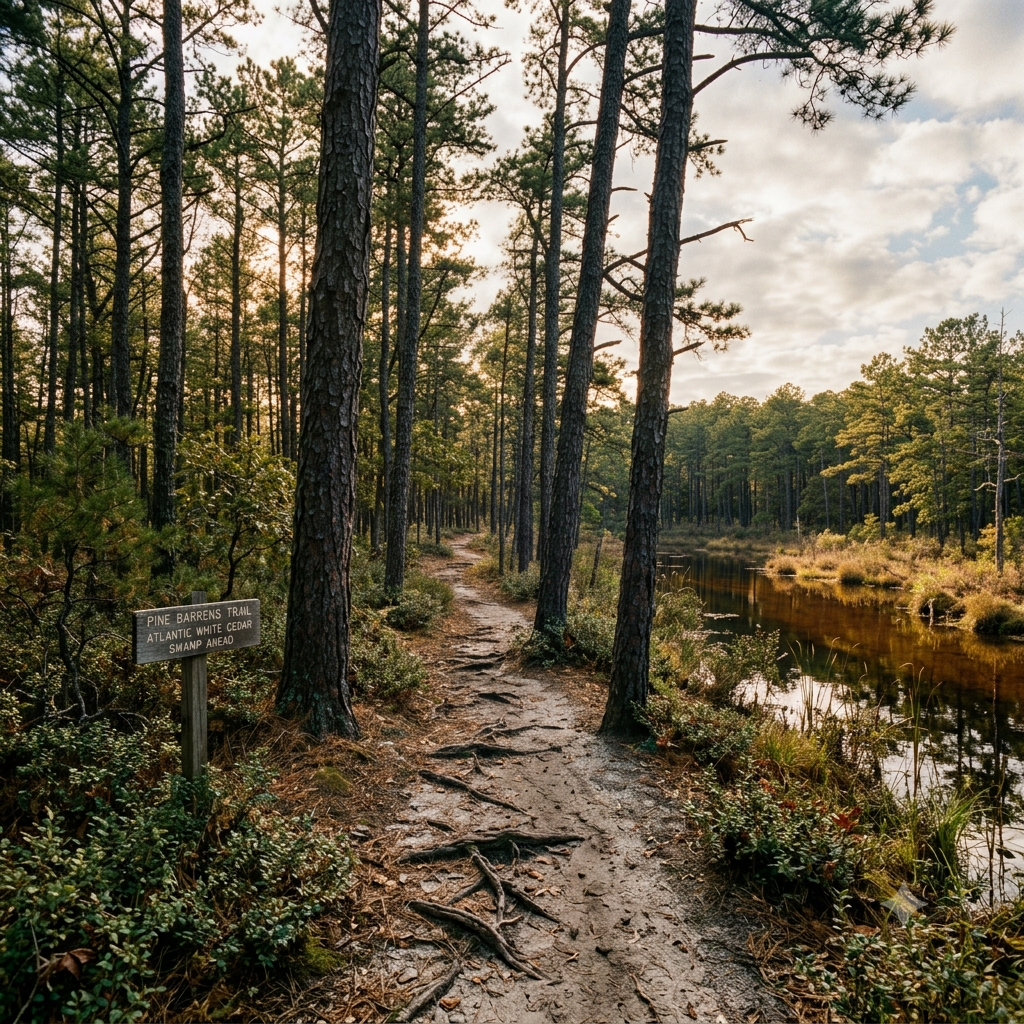
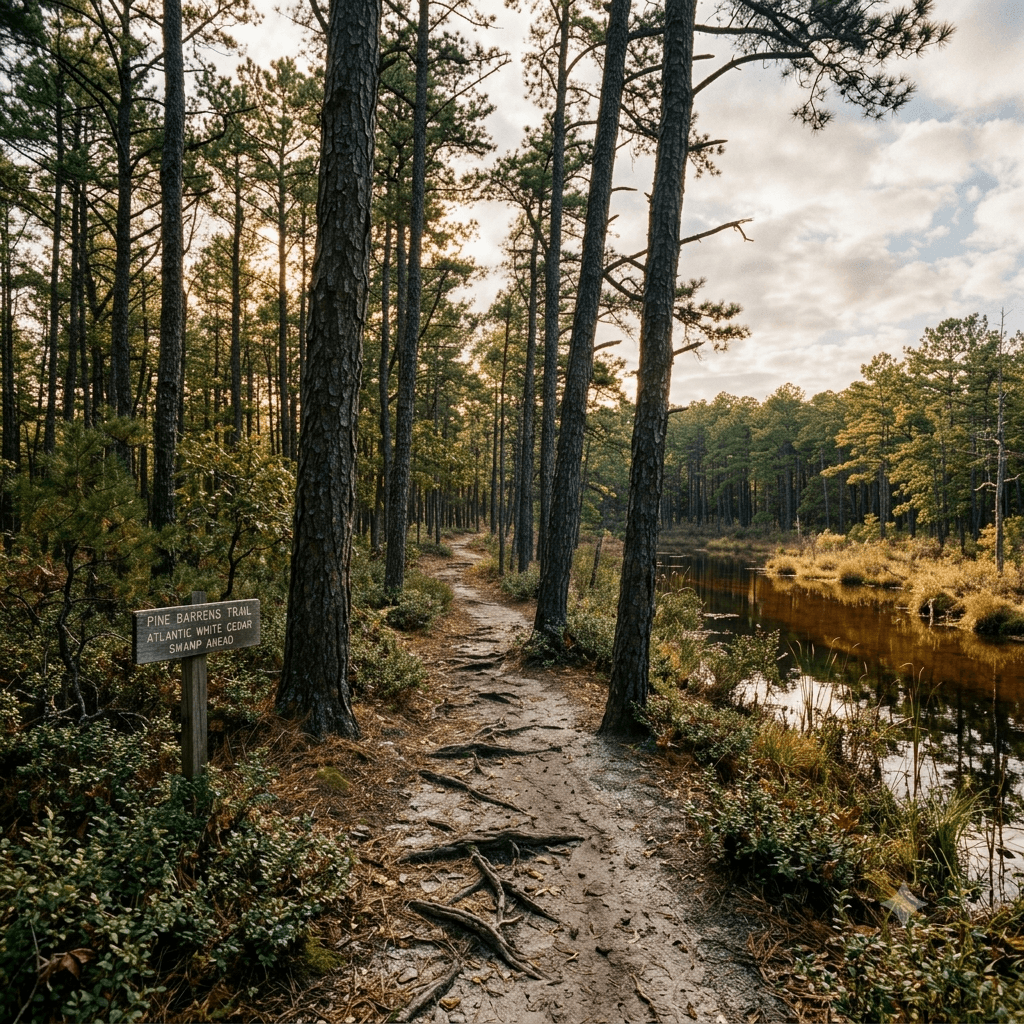
Disclosure: the header photo for this story was created or materially edited with AI.
What happened
Where it happened
- South Jersey.
Most people know New Jersey’s Pine Barrens for one thing: the Jersey Devil.
That’s the problem.
The legend gets all the attention while the real story—arguably one of New Jersey’s greatest achievements—goes largely unnoticed.
Hidden across South Jersey is a landscape so vast that it reshapes how you think about the state itself. Stretching for more than one million acres, the Pinelands aren’t just another forest. They’re one of the largest protected open spaces in the Northeast, home to thriving communities, rare wildlife, globally significant water resources, and a planning system unlike anywhere else in America.
The Pine Barrens aren’t empty.
They’re one of the reasons New Jersey still has room to breathe.
Bigger than most people realize
The National Park Service says the New Jersey Pinelands National Reserve covers more than one million acres across portions of seven South Jersey counties. Within its boundaries are 56 municipalities and more than 700,000 residents.
That changes the picture immediately.
This isn’t an isolated patch of woods hidden off the Garden State Parkway. It’s one of New Jersey’s defining landscapes, woven into everyday life while remaining surprisingly wild.
Congress recognized that importance in 1978 by creating the nation’s first National Reserve. A year later, New Jersey established the Pinelands Commission to guide development while protecting the region’s unique character.
That balance still defines the Pinelands today.
The conflict: Growth versus preservation
New Jersey is one of the most densely populated states in America.
Without protections, development naturally spreads outward—one subdivision, one shopping center, one industrial park at a time.
The Pinelands faced that exact future.
Unlike many forests that disappear piece by piece, state and federal leaders made an unusual decision: treat the entire region as one connected ecosystem instead of a collection of individual towns.
That changed everything.
Today, what gets built, what stays protected, and how communities continue to grow all pass through a planning framework designed to preserve the landscape for future generations.
More than just pine trees
The Pinelands aren’t simply forests.
They’re an intricate system of sandy soils, wetlands, rivers, rare plant communities, farms, historic villages, and one of the country’s most important freshwater aquifers.
The Pinelands Commission says protecting the region means balancing environmental preservation with the needs of the people who actually live and work there.
It’s not about freezing the landscape in time.
It’s about making sure New Jersey doesn’t lose something it can’t replace.
As development continues across the state, the Pinelands provide wildlife habitat, clean water, outdoor recreation, and a vast stretch of open land that’s becoming increasingly rare throughout the Northeast.
In many ways, they’re New Jersey’s ecological safety valve.
The biggest myth
Ironically, the Jersey Devil has probably done more to make the Pine Barrens famous than anything else.
Ghost stories, haunted highways, and eerie forests dominate the conversation.
The reality is far more impressive.
The Pinelands are alive with neighborhoods, working farms, local businesses, hiking trails, rivers, firefighters, scientists, hunters, conservationists, and families who call the region home.
It’s not a forgotten wilderness.
It’s one of New Jersey’s most carefully managed—and most important—places.
Why this matters
The Pine Barrens remind us that New Jersey isn’t just highways, suburbs, diners, and shore traffic.
It’s also home to America’s first National Reserve, a million-acre protected landscape, and one of the most ambitious conservation efforts in the country.
That’s a story worth knowing.
Because when people reduce the Pine Barrens to spooky woods and Jersey Devil legends, they miss what makes the region truly remarkable.
The real mystery isn’t why the Jersey Devil became famous.
It’s why one of New Jersey’s greatest natural treasures still flies under the radar.
Continue with related coverage
Use these archive links to keep following this story by location and topic.