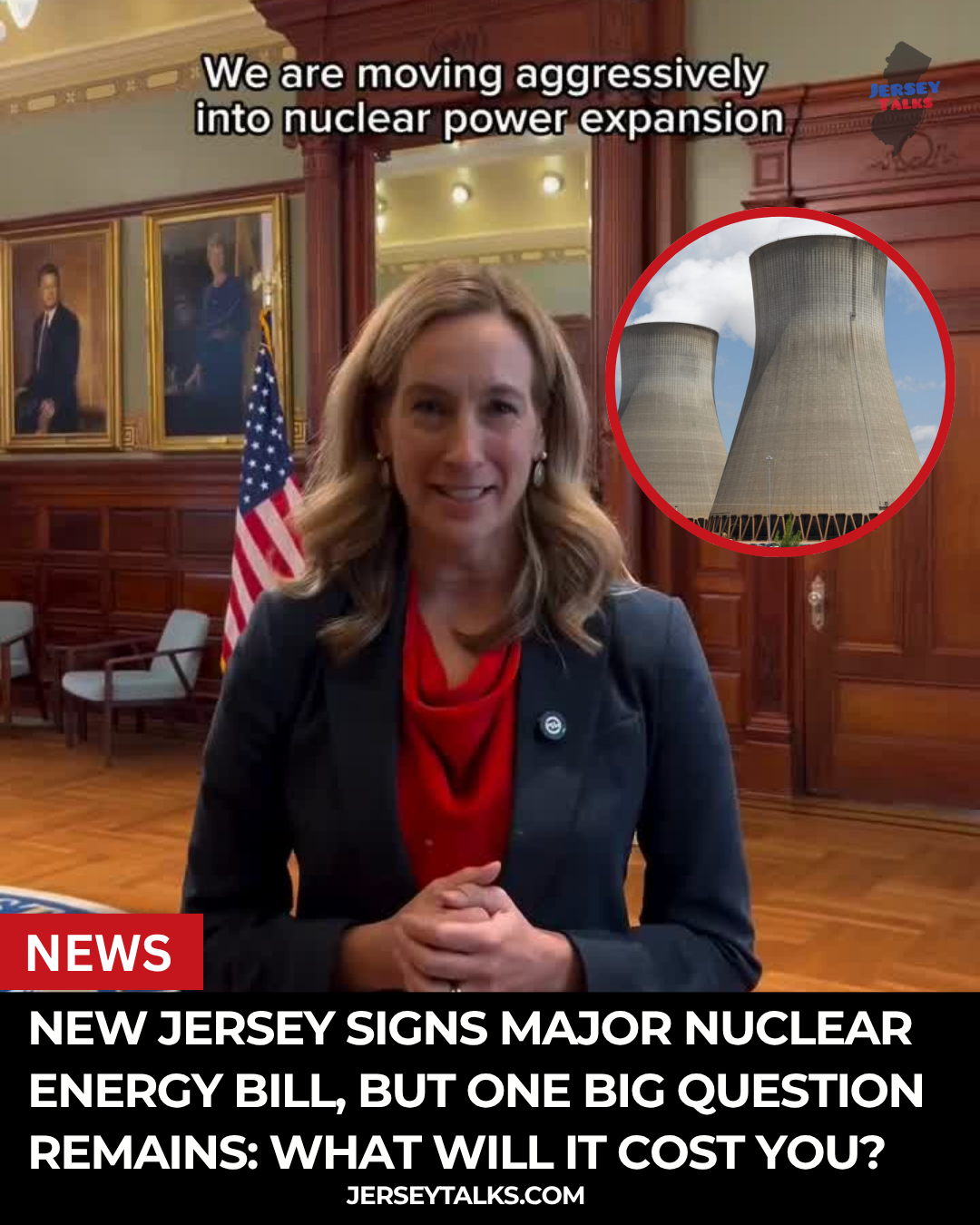
New Jersey Signs Major Nuclear Energy Bill, but One Big Question Remains: What Will It Cost You?
What happened
What remains unclear
- The analysis also notes that future project revenues could offset some costs, but the amount is unknown.
New Jersey took a major step toward expanding nuclear power on Monday, July 13, 2026. What it did not do is tell residents how much it could eventually affect their electric bills.
Governor Mikie Sherrill signed the Power NJ Act, launching a competitive process for at least 1,100 megawatts of new nuclear generation through the New Jersey Board of Public Utilities (BPU) and the New Jersey Economic Development Authority (EDA).
The administration says the law includes an important safeguard: customers would not pay for a project while it is being built, and developers must secure federal financing before a project can move forward.
That does not mean a new nuclear plant has been approved.
It also does not mean New Jersey knows what the final cost to ratepayers will be.
According to a July 6 legislative fiscal estimate, the future impact on electric bills remains undetermined because no project has been selected. The BPU would still need to negotiate and approve the project's price, payment schedule, contract length, and other financial terms before any customer costs are established. The analysis also notes that future project revenues could offset some costs, but the amount is unknown.
That uncertainty is the biggest takeaway from the new law.
State leaders argue the measure is designed to strengthen New Jersey's energy supply and prepare for growing electricity demand while keeping long-term costs under control. Critics and supporters alike, however, will have to wait until an actual project is negotiated before anyone knows what it could ultimately mean for monthly utility bills.
What Happens Next?
The law lays out a multi-year process before any project can move ahead:
- Within 180 days (by Jan. 9, 2027): The BPU must open a request for expressions of interest from potential developers.
- Within the following 90 days: The state will determine which proposals advance to negotiations.
- Negotiations can last up to 12 months, with the BPU required to determine whether a project benefits ratepayers and whether its costs are reasonable before issuing a final approval, currently targeted before July 8, 2028.
The legislation also requires at least two public comment periods and a public hearing in any municipality where a project is proposed.
The Bottom Line
New Jersey has officially opened the door to new nuclear power, but it has not approved a project or set a price for customers.
For now, the state's promise is clear: no ratepayer charges during construction. Whether the project ultimately saves money or increases electric bills will depend on the terms negotiated over the next two years.
Continue with related coverage
Use these archive links to keep following this story by location and topic.